
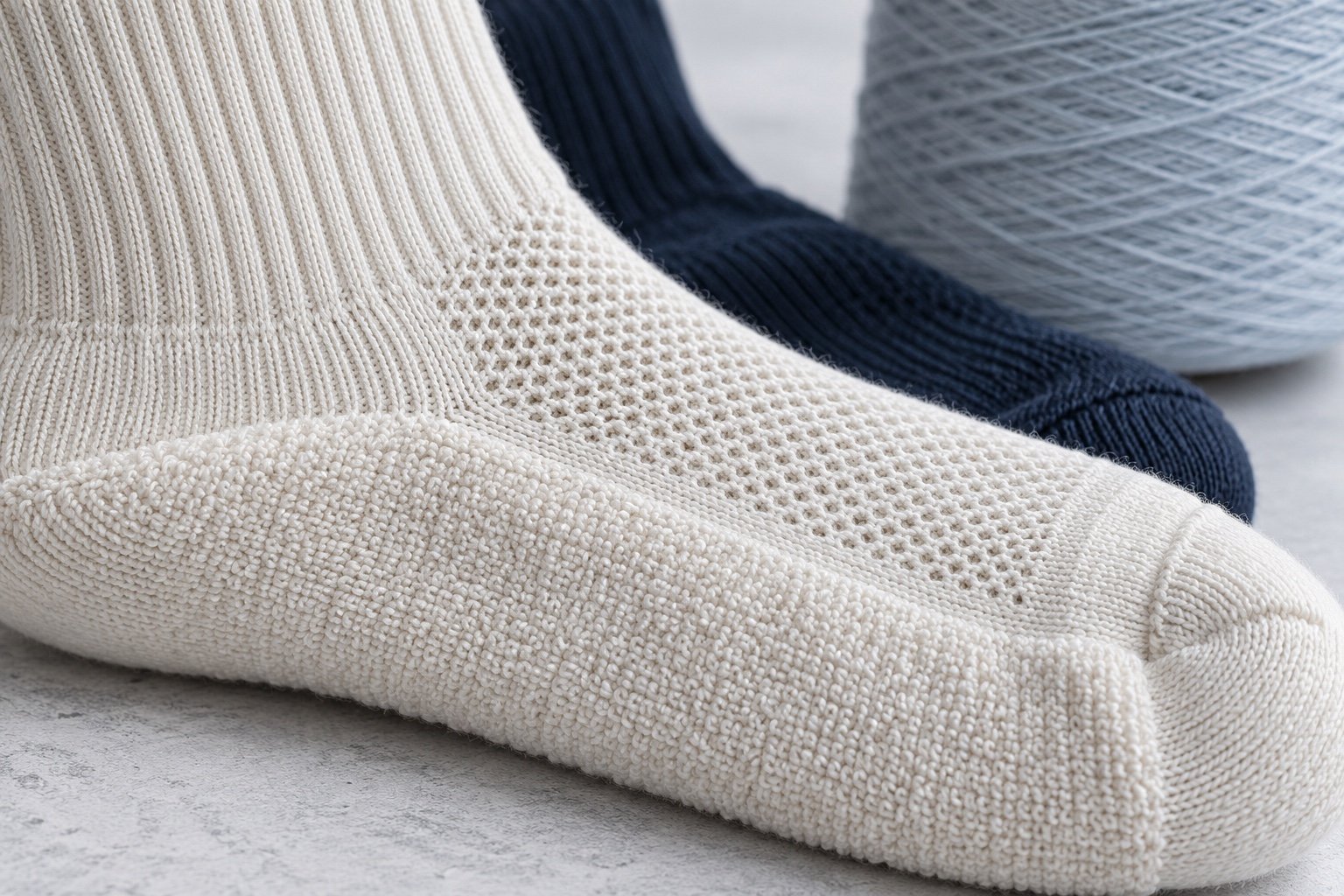
How to start a sock brand — the details that matter
Describe the customer, activity, footwear and price position. These choices influence the construction and range. A product for a Pilates studio differs from a multipack essential, even when both carry the same brand.
2. Keep the opening range deliberate
Choose the lengths, colours and sizes that form a coherent launch. Avoid adding variants without a commercial reason. Think about how the minimum order quantity will be distributed and which styles you expect to reorder.
3. Specify material and construction
State the desired hand feel, thickness, fibre blend and fit. If you are unsure, send an annotated reference and explain what you like about it. Identify mandatory certification and testing requirements before selecting materials.
4. Prepare artwork and a tech pack
Collect logo files, colour references, measurements and packaging instructions. Mark which version is current. A clear written brief prevents a screen mockup from becoming the only product specification.
5. Review the sample carefully
Check appearance, fit, cuff feel and toe finish. Review it with the intended footwear and follow the proposed care instructions. Consolidate changes into one approval record before bulk production.
6. Finalise packaging and information
Confirm pair counts, care labels, composition, sizes and barcodes. Packaging artwork must reflect the actual approved product. Check legal and market-specific requirements with suitable advisers where needed.
7. Plan production and the next order
Agree quantities, schedule, commercial terms and shipment requirements with your supplier. Leave room for approval stages in your launch plan. ELBASOCKS reviews private label projects starting from 1,000 pairs.
Make the first collection test a clear idea
Start with a customer and a specific reason for the collection to exist. A focused everyday range, studio product or design-led capsule creates a different manufacturing brief. Decide which features the customer is expected to value and which claims need evidence. Keep the initial range manageable enough to review its construction, size coverage and packaging properly. A larger list of colours does not replace a clear product position.
Create a product brief before comparing prices
List the sock height, intended fit, yarn preferences, size run, artwork and packaging. Include the destination market and the quantity allocation you want to quote. If a detail is open, describe the priority instead of leaving it ambiguous. Comparing prices only makes sense when the quoted products have comparable specifications and scope. Ask whether sampling, packaging and relevant testing are included or require separate agreement.
Set up your approval record
Keep one current technical pack and identify the approved physical sample. Record colour and artwork revisions clearly. Review the product information panel alongside the sock so composition, sizing and claims agree with the finished item. Retain the product code for future orders. This foundation makes a first launch easier to manage and gives replenishment a defined starting point.
How to start a sock brand with a production-ready brief
Understanding how to start a sock brand means turning a collection idea into decisions that can be sampled, quoted and approved. Organise the product specification, size range and quantity before comparing manufacturing offers. A clear launch brief connects the brand direction with the construction and packaging your customer will receive. Share that brief through the ELBASOCKS form to begin a project-specific discussion.
Plan your manufacturing brief
Share your intended use, target customer, material preferences, size range and quantity. Minimum orders start at 1,000 pairs; the design, colour and size allocation is confirmed during quotation. Specify your destination market and required testing so the project can be reviewed as a complete product.
Use our manufacturing inquiry form, explore private label production or read the sock tech pack guide. For compliance information see quality and certifications.
For the official explanation of textile harmful-substance testing, see OEKO-TEX STANDARD 100. Programme information does not replace reviewing the current certificate and product scope for your order.