
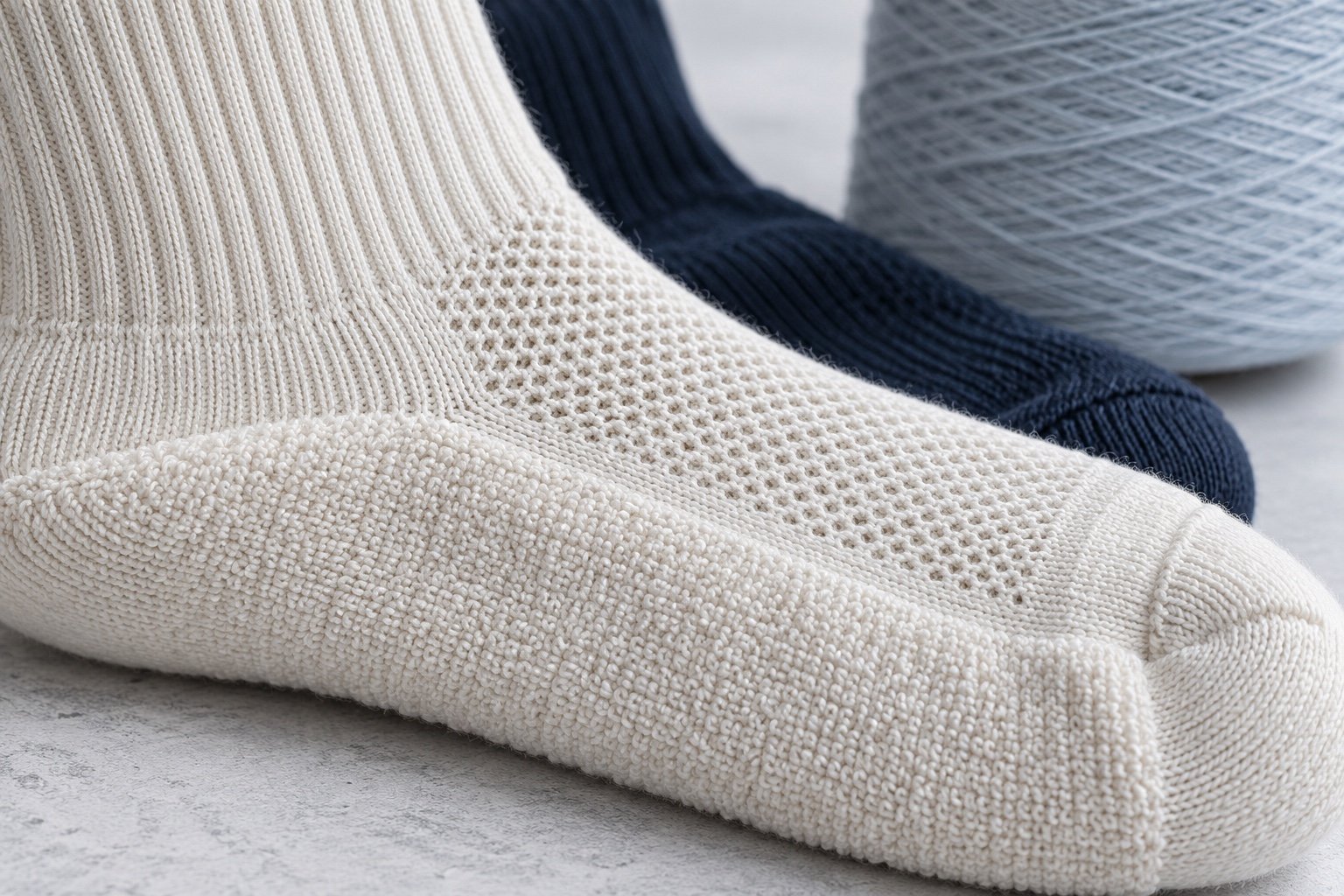
Sock tech pack — the details that matter
Include the product reference, intended use, finished dimensions, fibre composition, colours, artwork and size range. Add measurement tolerances where relevant. A product drawing is helpful, but written requirements explain details that a drawing cannot show.
Measurements and construction
Define foot and leg lengths, cuff width and other important dimensions using a consistent measurement method. Specify cushioning, rib structure and toe finish. State whether measurements refer to a relaxed product and how samples will be evaluated.
Artwork and colour references
Supply editable artwork and show placement at actual size. Identify the required colours and avoid relying on an uncalibrated screen alone. Label every file version clearly and consolidate changes before approval.
Quantity and packaging breakdown
List quantities by style, colour and size. Add pair presentation, barcode data, labels and carton marks. If a minimum order requirement affects the allocation, resolve it during quotation rather than after development.
Testing and approval
Include certification expectations, wash performance criteria and buyer manuals. Record the sample approval and any agreed exceptions. This turns the tech pack into a shared benchmark for production and repeat orders.
Describe dimensions with a consistent measurement method
A size label alone can leave important details unclear. Identify the measurement points and whether dimensions are taken in a relaxed or another specified condition. Include the relevant foot and leg measurements, cuff height and any construction-specific details. Agree tolerances where needed. A diagram with labelled points can help connect the written dimensions to the product and reduce differences in interpretation during sample review.
Give artwork a production reference
Show the position, scale and colour of each logo, stripe or motif. Supply vector artwork when available and include a reference visual that explains the intended result. Mark the current revision on the file. If a motif changes across sizes, describe the intended approach instead of assuming that the same placement will suit every size. Review the physical knitted result before final approval.
Include the complete packing brief
State the fold, label placement, single-pair or multipack arrangement, barcode and carton instructions. Attach current packaging artwork and identify the variable information for each style or size. Any certification-related wording or performance claim should have the appropriate supporting review. Keep packaging approval connected to the same product code as the sock specification.
Use change control through development
A technical pack should remain the shared current instruction as sampling progresses. Record revisions and confirm which version accompanies the approved sample. When an order is repeated, identify whether the original specification remains valid and list requested changes. Clear version control prevents a new yarn, artwork or label instruction from being lost among older files.
Plan your manufacturing brief
Share your intended use, target customer, material preferences, size range and quantity. Minimum orders start at 1,000 pairs; the design, colour and size allocation is confirmed during quotation. Specify your destination market and required testing so the project can be reviewed as a complete product.
Use our manufacturing inquiry form, explore private label production or read the sock tech pack guide. For compliance information see quality and certifications.
For the official explanation of textile harmful-substance testing, see OEKO-TEX STANDARD 100. Programme information does not replace reviewing the current certificate and product scope for your order.