
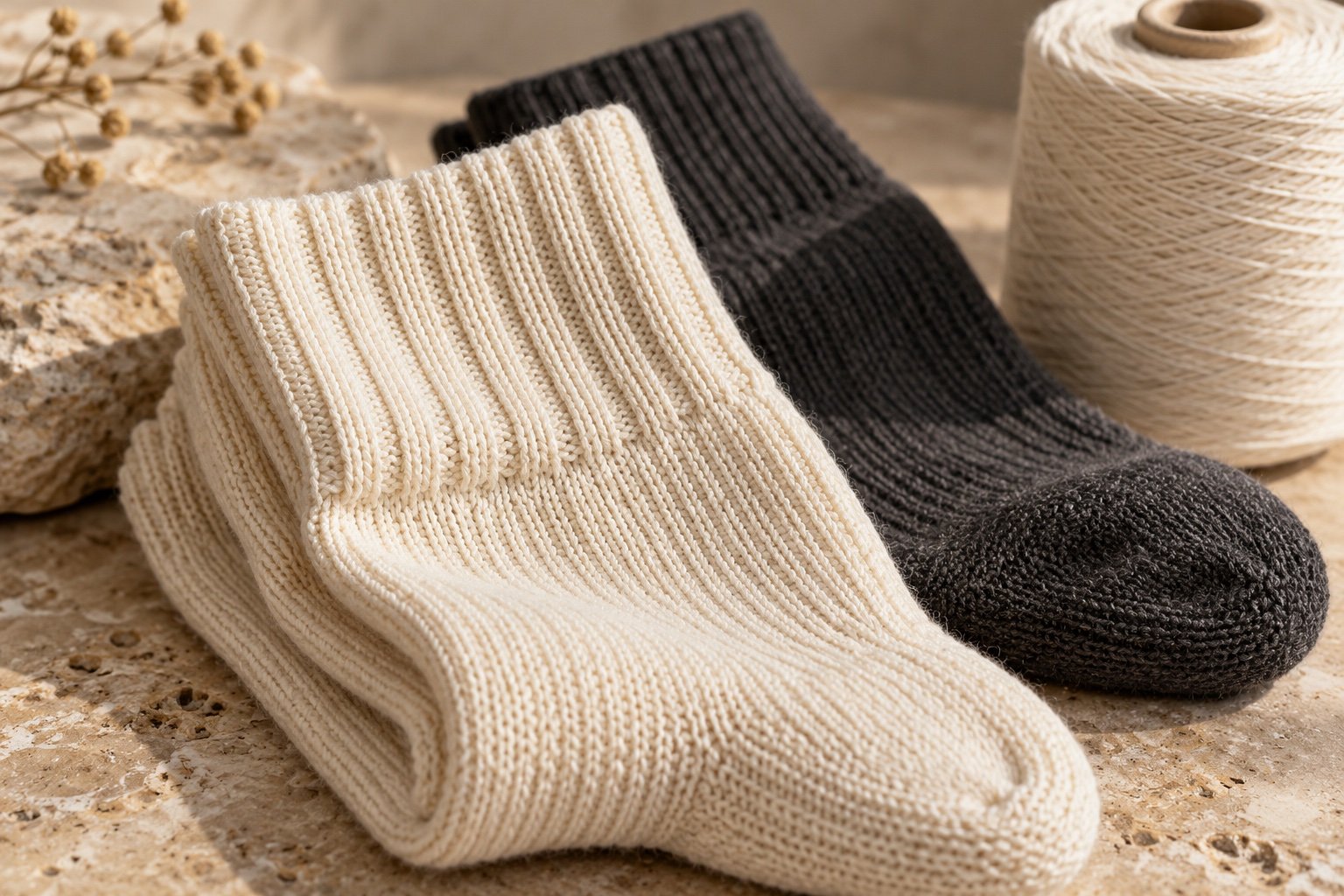
Sock materials — the details that matter
A fibre name is only the beginning. The blend, yarn specification, stitch structure and finish together determine the sock’s handle and appearance. Start with the wearer, the footwear and the intended use, then compare samples against that brief.
Cotton and bamboo-derived viscose
Cotton blends provide familiar everyday options. Bamboo-derived viscose can be selected for a different soft handle. Confirm the actual fibre composition and destination labelling. Neither a fibre name nor its origin should be treated as automatic evidence of environmental or performance benefits.
Wool and technical blends
Wool options can serve outdoor or premium everyday collections. Technical synthetic blends may suit other construction priorities. Discuss thickness, stretch, care and desired performance with the intended use in mind. Test any specific claim you intend to make.
Organic and recycled programmes
Request the applicable documentation before making an organic or recycled claim. The required standard, material percentage, supply-chain scope and labelling approval should be agreed within the project. Certification is specific, rather than a blanket attribute of every available fibre.
Compare blends as finished constructions
A fibre percentage does not describe the whole sock. Yarn structure, knitting density, terry placement and elasticity affect how the material feels and fits. Compare physical samples that use the relevant construction rather than assuming that two products with a similar composition will behave identically. Specify the intended footwear, season and care routine. These details give material selection a practical context and help avoid selecting a yarn solely because its name sounds appropriate.
Keep the fibre declaration accurate
Packaging should identify the actual agreed composition in the format required by the destination market. Bamboo-derived viscose should be described accurately; a soft hand feel does not establish an antibacterial claim. Organic or recycled-content wording needs suitable documentation for the product and supply chain. Review these requirements before sampling so the material choice and retail description can develop together. If a claim is essential to your collection, identify the evidence and test method it requires.
Use the sample review to compare priorities
Decide which aspects of the product matter most: a refined appearance, cushioning, a close shoe fit, a seasonal hand feel or another defined priority. Review the sample against these requirements and the proposed dimensions. A heavier sock may feel cushioned but require more room in the shoe; a fine construction may create a different experience.
The aim is an appropriate balance for the intended wearer, not a single material that is automatically best for every use.
Record the final material decision
Include the approved composition and any relevant yarn or colour reference in the technical pack. Identify required testing, care wording and sourcing documentation. Keep this information connected to the product code and the approved sample. A repeat order should state whether the same material specification is required or whether a new blend is being considered. This gives both sides a clear basis for reviewing any change.
Plan your manufacturing brief
Share your intended use, target customer, material preferences, size range and quantity. Minimum orders start at 1,000 pairs; the design, colour and size allocation is confirmed during quotation. Specify your destination market and required testing so the project can be reviewed as a complete product.
Use our manufacturing inquiry form, explore private label production or read the sock tech pack guide. For compliance information see quality and certifications.
For the official explanation of textile harmful-substance testing, see OEKO-TEX STANDARD 100. Programme information does not replace reviewing the current certificate and product scope for your order.
Compare sock materials using samples with a clearly described construction, size and intended use. Record the approved sock materials in your technical pack, then check that composition and care information on packaging describe the same finished product.