Custom socks manufacturing — the details that matter
OEM production follows the requirements of your product. Include the intended use, fibre blend, finished measurements, artwork and packaging specification. If a physical sample is the benchmark, explain what you want to preserve and what you want to improve. A reference alone rarely communicates every important detail.
Construction and artwork work together
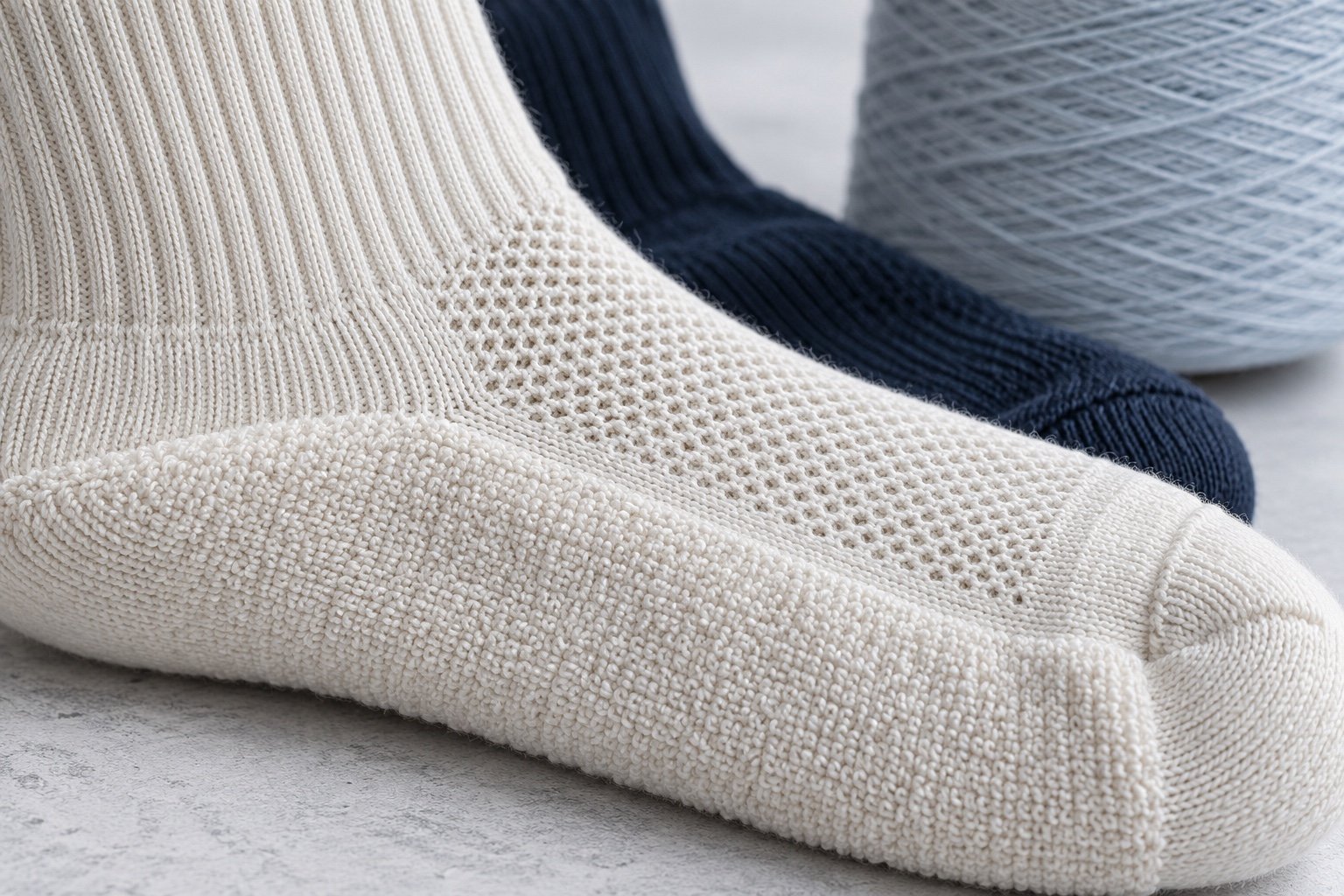
Fine patterns, large logos, ventilation zones and cushioning each affect the knitting specification. We review the design as a wearable textile product, not simply an image on a screen. Some artwork may need adjustment for stitch definition and the selected size.
Choose the right level of customisation
A new construction gives greater control but involves more development decisions. A familiar shape with new colours and branding may suit a faster collection extension. Discuss the trade-off between product differentiation, quantity and development effort before finalising the range.
Build a repeatable specification
Record the approved composition, measurements, colour references and finish. Confirm how sizes will be labelled, how pairs will be packed and how cartons will be identified. A complete specification makes it easier to compare the sample with bulk production and plan repeat orders.
Separate the fixed requirements from the open decisions
An OEM inquiry is easier to review when it identifies which details must remain unchanged and which can be developed. A buyer may need a particular yarn composition, cuff height or logo position while remaining open to the precise construction. Mark these priorities in the technical brief. Include reference images with an explanation of what each reference demonstrates; a photograph alone may leave the dimensions, fabric weight or internal construction unclear.
If you have a physical reference sample, discuss how it can be reviewed against the written requirements.
Describe each variation explicitly
List the proposed styles, colourways and sizes with a quantity for each. Identify shared features and the details that change between variants. This helps distinguish a colour update from a new construction and keeps the quotation connected to the range you actually intend to order. Include the destination country and any product testing or packaging requirements.
An established collection can use a simple product-code system to prevent similar styles from being confused during sampling, approval and replenishment.
Agree what the sample needs to prove
Sampling should answer the decisions that matter to your product: fit, dimensions, colour, branding, toe finish or another specified feature. Establish which sample and revision represent the final approved benchmark. Packaging approval and testing requirements should be recorded alongside the physical product. Bulk production then follows the agreed specification. If a requirement changes, review its effect on the product, price and schedule before treating the original approval as sufficient.
Plan beyond the initial order
Share your expected replenishment pattern if the collection is intended to continue. Repeat production benefits from retained references and clear change records. A monthly manufacturing capacity of 1,000,000 pairs provides scale, while an individual order still needs an agreed schedule. ELBASOCKS reviews projects from 500 pairs; allocations and delivery arrangements are confirmed with the complete brief.
Plan your manufacturing brief
Share your intended use, target customer, material preferences, size range and quantity. Minimum orders start at 500 pairs; the design, colour and size allocation is confirmed during quotation. Specify your destination market and required testing so the project can be reviewed as a complete product.
Use our manufacturing inquiry form, explore private label production or read the sock tech pack guide. For compliance information see quality and certifications.
For the official explanation of textile harmful-substance testing, see OEKO-TEX STANDARD 100. Programme information does not replace reviewing the current certificate and product scope for your order.
Custom Socks Manufacturing: six details to confirm
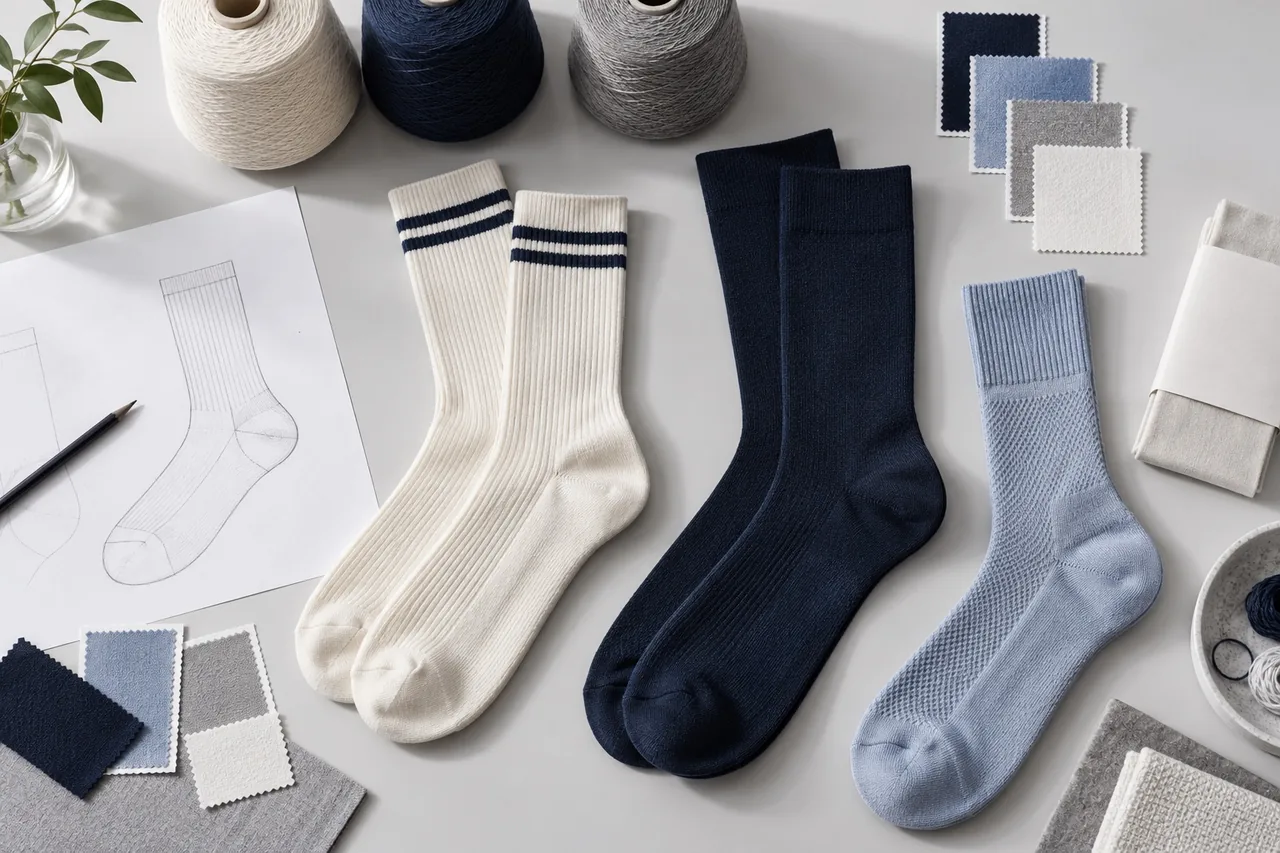
Separate the visual reference from the production specification. A reference photograph can explain appearance, while your tech pack should define the material blend, dimensions, construction and packing. If you request several options, identify each version separately and approve the final combination before production.
- Intended wearer and use
- Full material specification
- Size and construction
- Knitted artwork
- Packing and barcode data
- Approved sample revision
Keep the approval record with your order
Identify the dated sample, artwork and packing references in the same order record. State any requested change explicitly and confirm how it affects the product or commercial offer. Retain the agreed documents for the next run so your team can distinguish an exact repeat from a revised specification.
Send your category, quantity in pairs, sizes and destination through our manufacturing inquiry form. You can attach a logo or technical PDF and explain which choices are still open. ELBASOCKS reviews orders from 500 pairs, with allocation and timing confirmed in your quotation.
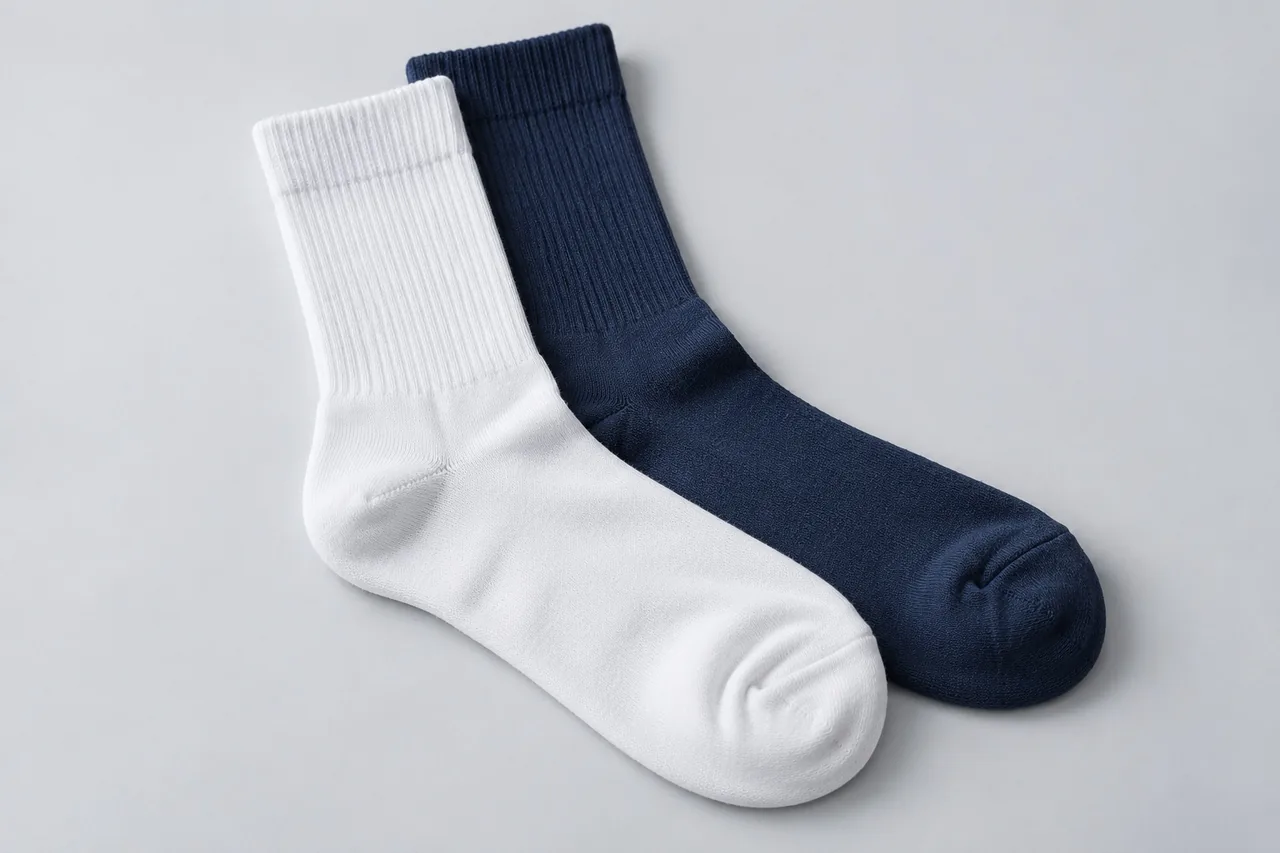
Custom socks: questions before your first order
Use these answers to prepare a brief for custom socks. The written quotation and approved sample define the final product and order terms.
Can custom socks use my own knitted logo?
Yes. Send your artwork, placement and size requirements. The knitted result is reviewed during sampling, including how fine lettering looks when the sock is worn.
What is the starting quantity for custom socks?
ELBASOCKS reviews orders from 500 pairs. The practical allocation across designs, colours and sizes is confirmed in your quotation.
Which materials can I request for custom socks?
Describe the intended use and preferred fibre blend. Material options are reviewed with the construction and final sample; any certification claim requires the applicable supporting documentation.
How are custom socks approved before production?
Review the sample, dimensions, artwork and packing, and record agreed changes under one dated reference. Confirm the final revision before approving production.
Can custom socks include branded packaging?
Share label or band artwork, selling units, barcode data and carton requirements. Review the packing format with the sock specification so both represent the same approved order.
What should I send to request custom socks?
Send the intended category, wearer, size range, quantity and destination. Attach your logo or technical PDF and identify any details still open for development. Sample preparation time is confirmed in the offer.