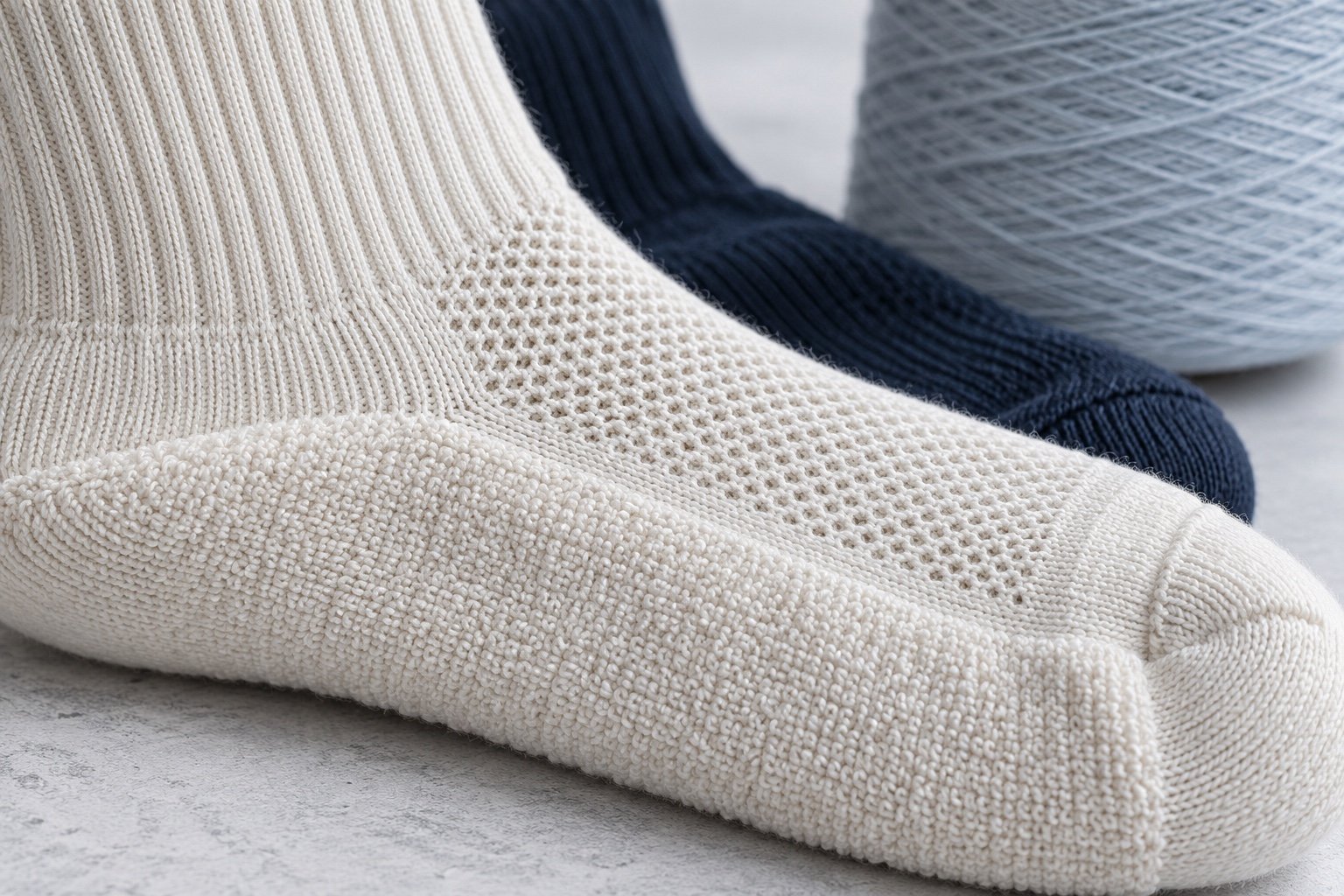
Sock materials comparison: look beyond the fibre name
Compare finished constructions as well as fibre composition. Two socks with the same headline material can differ in thickness, elasticity and handle. Your customer, footwear and intended activity should guide the comparison.
Cotton blends
Cotton is familiar in everyday products and can be used across varied constructions. Supporting fibres and stitch density affect recovery and durability. Confirm the complete blend, then evaluate the sample against the intended use.
Bamboo-derived viscose blends
Bamboo-labelled products often use viscose derived from bamboo. Use accurate composition language and assess the finished fabric. Environmental and antibacterial claims need evidence; they cannot be inferred simply from the feedstock.
Wool blends
Wool can be considered for outdoor and premium collections. Fibre characteristics, blend percentages and care instructions matter. The construction determines how much bulk the sock adds inside footwear.
Build your own comparison brief
Ask for samples with clearly identified compositions and constructions. Assess fit, feel, appearance and care together. Request the documentation needed for any organic, recycled or other product claim before approving packaging.
Cotton blends in everyday and sports constructions
Cotton blends can be developed across refined dress products, everyday basics and cushioned constructions. The supporting fibres and knitting structure affect recovery, fit and fabric weight. Compare samples within the relevant category instead of treating every cotton sock as equivalent. If organic cotton is required, confirm the documentation and eligible scope for the particular collection. A cotton composition alone does not establish an organic claim.
Bamboo-derived viscose and accurate language
A product sold as a bamboo sock commonly uses viscose derived from bamboo cellulose. The fibre declaration should reflect the actual material. Evaluate the complete blend and construction for hand feel and fit. Avoid assuming antibacterial or environmental benefits from the word bamboo alone. Any claim used in marketing should have the relevant evidence for the actual product, rather than relying on a general description of a raw material.
Wool blends for different seasonal priorities
Wool and merino blends can support different product directions depending on composition, yarn and construction. Consider the intended footwear, fabric weight and care routine. Review the sample as a complete sock and identify the priorities your customer will notice. Supporting fibres may contribute to shape and durability, so the main fibre percentage should be assessed alongside the rest of the specification.
Choose with a comparison brief
When requesting alternatives, keep dimensions, intended use and packaging requirements consistent. Explain which factors are fixed and which you want to compare. Use a sample review to assess the differences, and agree any needed testing before approving claims. Record the chosen composition in the technical pack and make sure the label describes the same product. There is no single material choice that is automatically right for every collection.
Plan your manufacturing brief
Share your intended use, target customer, material preferences, size range and quantity. Minimum orders start at 1,000 pairs; the design, colour and size allocation is confirmed during quotation. Specify your destination market and required testing so the project can be reviewed as a complete product.
Use our manufacturing inquiry form, explore private label production or read the sock tech pack guide. For compliance information see quality and certifications.
For the official explanation of textile harmful-substance testing, see OEKO-TEX STANDARD 100. Programme information does not replace reviewing the current certificate and product scope for your order.
Use this materials comparison to identify what you want to evaluate in a physical sample. A materials comparison becomes more useful when construction, dimensions and intended footwear are clearly defined, allowing the yarn decision to be reviewed in the context of the complete product.