Sock knitting construction: wearer and footwear
Sock knitting construction should support the way a product will be worn. A fine business sock needs a different balance of thickness, appearance and fit from a cushioned training sock. Begin with the wearer, footwear, activity and season. Then define the required sock height, measurements, yarn feel and cushioning zones.
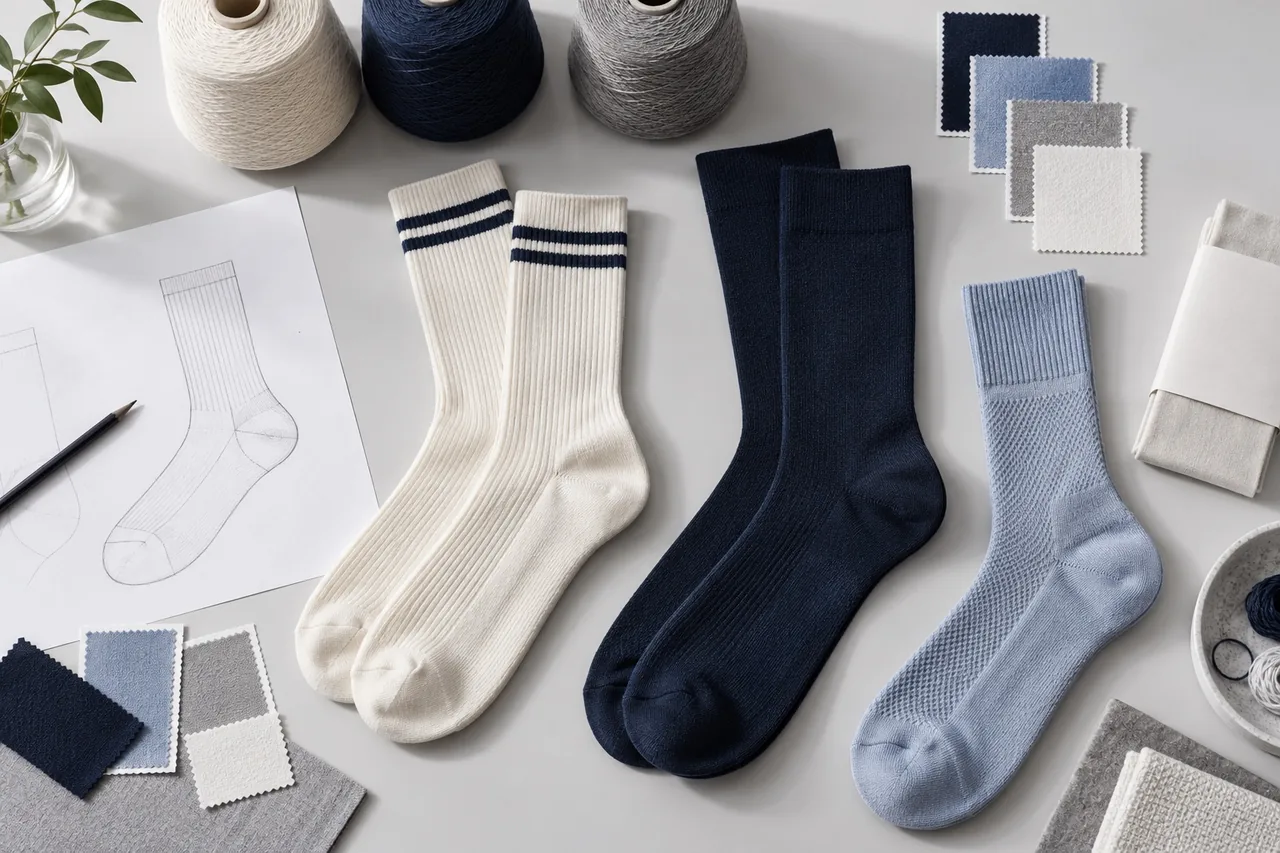
Send a reference pair if possible and explain which details matter. A photograph helps describe appearance, but it cannot establish weight, stretch recovery or the feel of a toe seam. Use our sock tech pack guide to turn those requirements into a specification.
Sock knitting construction and needle count
Needle count describes the number of needles around a knitting cylinder. It is useful when discussing stitch density and artwork resolution, but it does not establish overall quality by itself. Yarn thickness, sock dimensions, stitch settings and finishing also influence the result. A higher number is not a universal improvement for every category.
Ask which construction is appropriate for your target product rather than choosing a number in isolation. Confirm feasibility during development. ELBASOCKS reviews the proposed construction against the actual brief; this guide does not promise a particular machine configuration for every order.
Plain knit, rib and terry cushioning
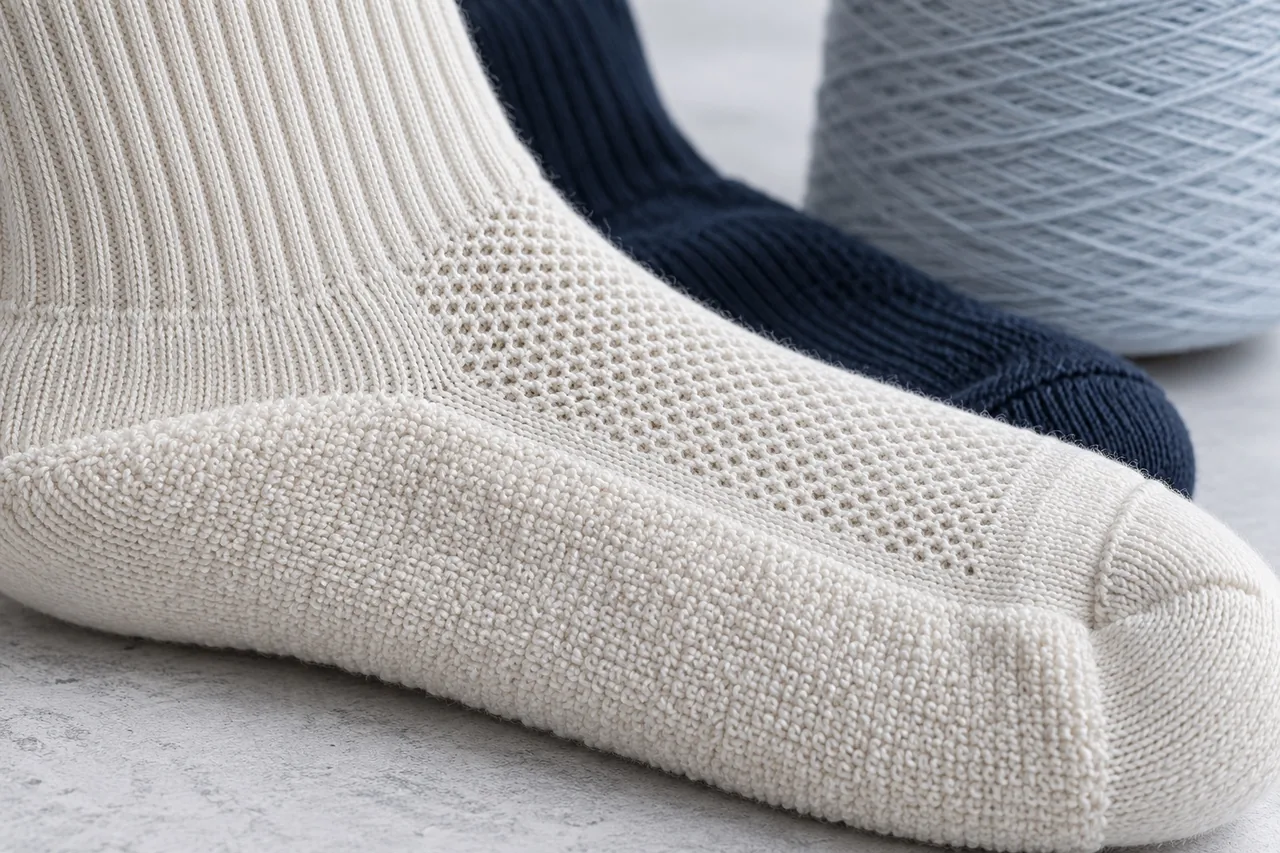
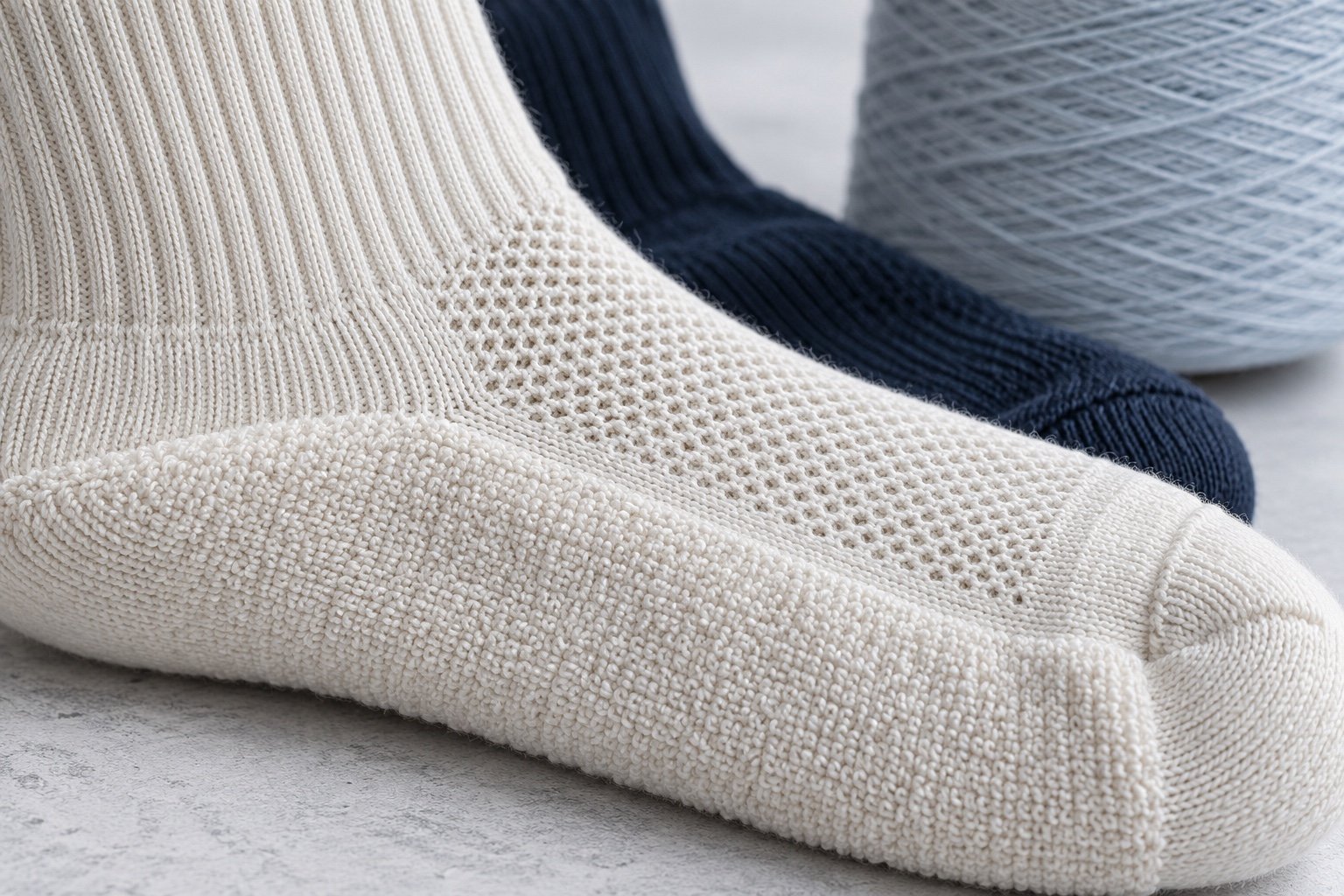
Plain knitted areas provide a base for everyday styles and patterns. Rib structures affect stretch and the appearance of the leg or cuff. Terry loops add cushioning and thickness where specified, such as the sole, heel or toe. Full cushioning and targeted cushioning should be described separately.
Mark the cushioning zones on a drawing and review them with the intended footwear. Excess thickness can change shoe fit. If ventilation panels or an arch band are requested, identify their position and purpose. The sports sock page explains the starting brief for active use.
Knitted artwork and jacquard limitations
A knitted logo is formed within a stitch grid. Fine lettering, small gaps and gradients may require adjustment before sampling. Place the logo on the sock outline, state its dimensions and identify colours that must remain distinct. Ask to review a knit-ready interpretation before the physical sample.
Assess the design both relaxed and stretched on a wearer. The approved sample establishes the finished appearance more reliably than a flat digital mockup. See jacquard sock manufacturing for pattern development.
Toe finish, cuff comfort and approval
Describe the toe finish you expect and inspect it inside the sample as well as from outside. Assess cuff pressure, stretch recovery and dimensional consistency using an agreed size and care procedure. Claims such as seamless or compression should match the actual construction and available evidence.
Keep one signed specification with the approved sample, final artwork and revision date. Record any agreed deviation before production. A short checklist is easier to control than approvals spread across multiple messages.
Request a sock knitting construction review
ELBASOCKS manufactures private label socks in Istanbul, Turkey, with orders starting from 500 pairs. Design, colour and size allocation are confirmed in your quotation. Share the intended use, sizes, yarn preferences, artwork and reference sock through the manufacturing inquiry form. You can attach a PDF, logo or product image.
The sample fee is deducted from your first production order. Sample preparation and production timing are agreed in the quotation. Our monthly capacity is 1 million pairs; the production slot for your project is confirmed separately.
For example, a buyer developing a crew sock for trainers can mark a cushioned sole, a lighter instep and a knitted calf logo in the brief. The sample review then checks shoe fit, logo readability when stretched, cuff comfort and the agreed wash measurements. If a heavier yarn changes thickness, record that decision before approving the final version. Use one dated reference for both the sock and its packing. This keeps a construction change visible to the buyer rather than allowing a revised material to enter production without an agreed benchmark.
For the official explanation of textile harmful-substance testing, see OEKO-TEX STANDARD 100. Review the current certificate and its product scope separately for your order. A sock knitting construction review should refer to that same approved specification.
Sock Knitting Construction: six details to confirm
Specify the wearer, footwear and required product before choosing a construction. Mark the proposed rib, cushion and ventilation areas on the brief. Review a sample rather than assuming a machine or needle count alone establishes the finished fit or quality. Confirm technical availability for the actual specification.
- Intended use and footwear
- Sock height
- Rib and cuff
- Cushion and ventilation
- Artwork in the knit
- Approved sample and measurements
Keep the approval record with your order
Identify the dated sample, artwork and packing references in the same order record. State any requested change explicitly and confirm how it affects the product or commercial offer. Retain the agreed documents for the next run so your team can distinguish an exact repeat from a revised specification.
Send your category, quantity in pairs, sizes and destination through our manufacturing inquiry form. You can attach a logo or technical PDF and explain which choices are still open. ELBASOCKS reviews orders from 500 pairs, with allocation and timing confirmed in your quotation.