Sock sample approval connects your design idea with the product that will be manufactured. A sample is useful only when the buyer and supplier agree what it represents and how it will be assessed. This guide gives private label brands nine essential quality checks, a practical approval record and a clear way to handle revisions before bulk production.
In this guide
1. Identify the sock sample approval version
Begin with the basics: style code, sample date, size, colour and specification version. Ask the supplier to identify whether the sample represents construction, fit, artwork, colour, packaging or a combination of these. A development sample may contain provisional elements, so do not assume everything you see is ready for production approval. Version control supports sock sample approval.
Use one review document and give every sample a clear reference. Keep photographs linked to that reference and retain the physical pair where possible. If several people review the product, consolidate their comments before sending them to the manufacturer. Conflicting feedback can create unnecessary revisions and make the current decision unclear. Material confirmation belongs in sock sample approval.
Connect the sample to the technical specification. The specification should identify the product details that can be checked, while the sample provides a physical reference for appearance and hand feel. Neither should contradict the other. Resolve any mismatch before moving forward. Measurements make sock sample approval more objective.
2. Check the proposed yarn and construction
Confirm the intended fibre composition and review how the sock feels for its target use. Look at the rib structure, cushioning zones, mesh areas and any reinforcement requested in the brief. A soft hand feel alone does not establish durability or performance; those requirements need appropriate definitions and, where necessary, testing. Record fit observations during sock sample approval.
Ask whether the sample uses the proposed bulk materials and whether any substitution remains open. If the yarn or finishing will change later, identify what needs to be rechecked. Do not approve the sample as a complete production reference while a change likely to affect fit, appearance or performance is still unresolved. Check pair consistency during sock sample approval.
Our materials and yarns guide provides a starting point for discussing cotton, bamboo-derived viscose, wool and technical blends. Select the material together with construction and intended use. Avoid assuming that a fibre name guarantees the same result across different products. Link artwork to the sock sample approval reference.
3. Measure the agreed dimensions consistently
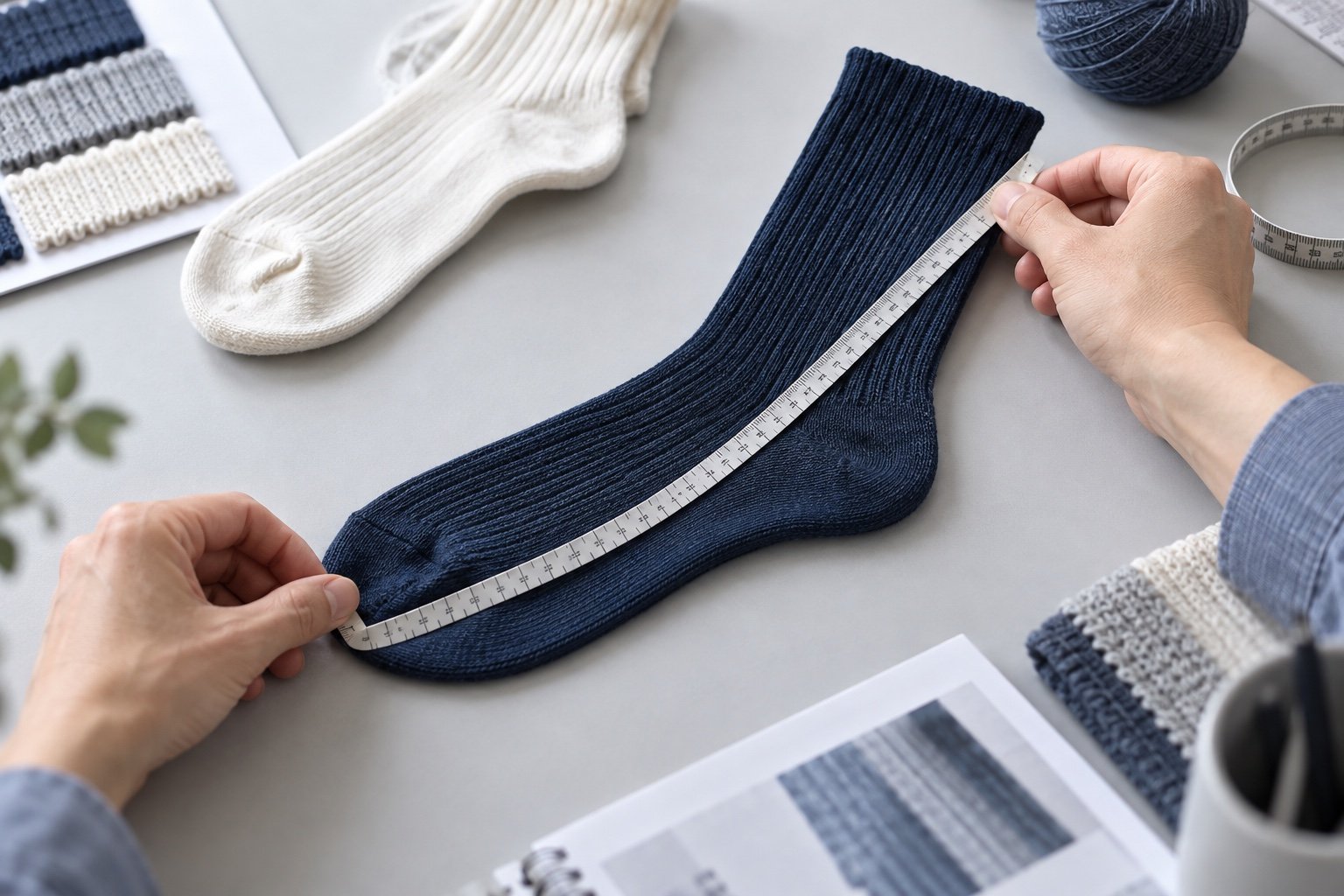
Use the measurement points and method agreed with the supplier. Foot length, leg length, cuff width and other dimensions should refer to a defined product condition and handling method. Ask how the sock is laid out and whether measurements are taken relaxed or stretched. Consistent methods matter when comparing results. Resolve testing before final sock sample approval.
Record the actual readings next to the target and agreed tolerance. Do not invent a universal tolerance for every sock. The appropriate limits depend on the construction, size and intended fit. If a measurement is outside the agreed range, report it clearly and ask the technical team to review the cause and proposed correction.
Check the size range according to the sampling plan. A single size may not answer every fit question for a broad range. Discuss where additional size checks are necessary and who will assess them. Keep the approved size chart with the sample record so packaging labels and product dimensions stay connected.
4. Review fit and cuff comfort on the intended wearer
Where practical, assess the sample on a wearer representative of the target size and customer. Review heel placement, toe room, cuff position and any bunching or excessive tension. Record the size used for the assessment and the conditions of the review. One person’s preference should not be confused with a universal fit conclusion.
For activity-specific products, define the intended use and review plan. A sports sock, dress sock and Pilates grip sock have different priorities. Identify the fit and construction characteristics you need rather than using a general description such as high performance. If specialist claims are planned, agree the evidence separately.
Consolidate feedback into observable points. “The heel pocket sits below the wearer’s heel in the reviewed size” is more actionable than “the fit feels wrong.” Ask the supplier how a proposed change may affect other dimensions or stretch. Confirm whether the revision requires another physical sample.
5. Assess toe finish, surface and paired appearance
Inspect the toe finish, loose yarn ends, visible surface irregularities and the overall appearance of the pair. Check areas that will touch the wearer’s skin and discuss anything that may cause discomfort. Describe the location and type of issue with clear photographs rather than using an undefined quality label.
Compare the two socks for visible consistency in length, rib alignment, pattern position and finish. The acceptance criteria should come from the agreed specification and review plan. Do not assume that a single pair proves consistency across the future bulk order. Ask how these characteristics will be monitored during production.
If a finish is part of your product story, check that the description matches the physical construction. Avoid using terms that imply a technical process or benefit unless they have been confirmed. The purpose of sock sample approval is to establish a reference that both teams can recognise and inspect.
6. Confirm colour, artwork and knitted branding
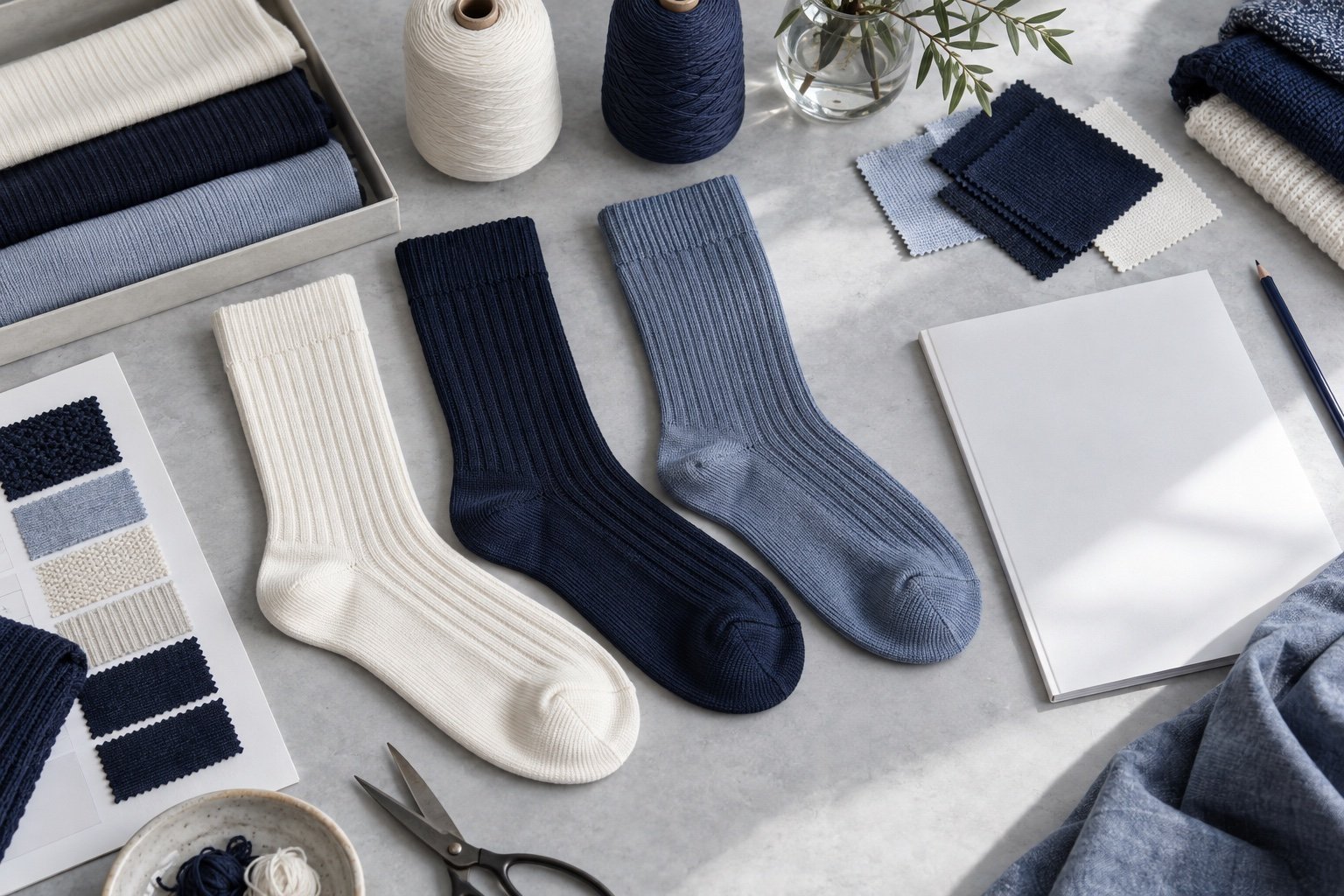
Review colour against the agreed physical or documented reference under a consistent viewing condition. Screen images can help communication but do not provide a reliable substitute for a physical colour decision. Record any accepted variation and identify whether additional colours need their own review.
Look at the knitted logo at the scale and position intended for production. Small letters, thin lines and detailed artwork can behave differently in knitting than in a digital file. Check legibility, placement and the relationship to the rib or pattern. Approve the knitted outcome rather than relying only on the original artwork.
If a revision changes yarn colours, pattern complexity or logo scale, ask whether it affects the quotation or production plan. Keep the final artwork file linked to the sample version. A clear file name and approval date help prevent a previous design from being used accidentally.
7. Agree wash review and testing requirements
Define the care instructions and any wash assessment before relying on it for approval. Record the procedure used and compare the reviewed sample against the agreed criteria. Look at dimensions, appearance and colour after the specified treatment. A casual home wash can provide observations, but it should not be presented as a standardised laboratory result.
If your buyer or destination market requires particular tests, name them early and agree the method, laboratory, timing and reporting scope. Avoid assuming that all testing is included in a standard quotation. Ask how the results relate to the specific sample, materials and production order.
Certification documentation needs a separate review. The OEKO-TEX STANDARD 100 programme concerns harmful-substance testing and label verification; it is not a substitute for every fit or durability check. Request current documents and confirm product scope before making certification-related claims on your packaging.
8. Approve packaging and the final quantity matrix
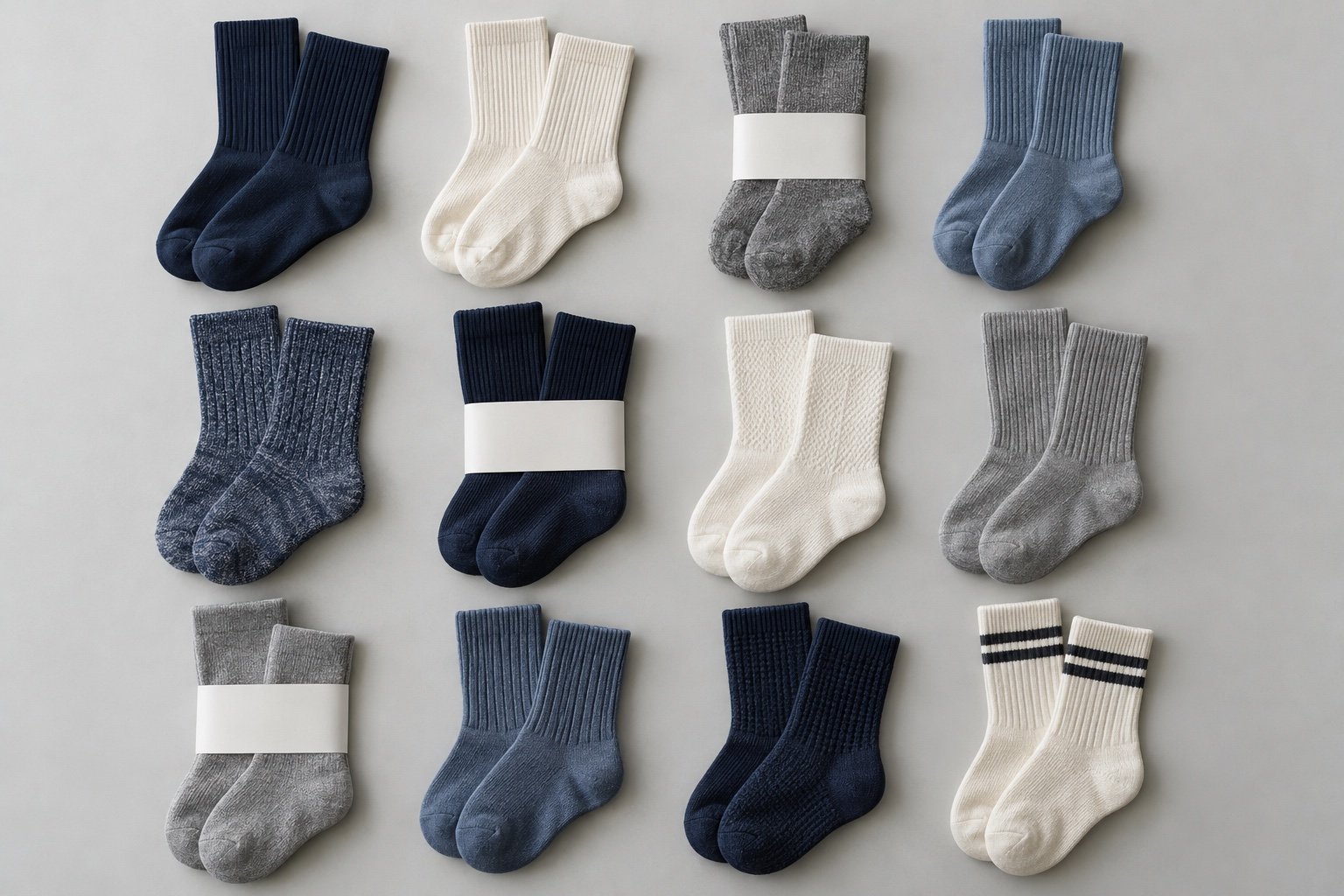
Review the product name, size, composition wording, care information, branding and any barcode details against the approved specification. Confirm who is responsible for checking the requirements of the destination market. Packaging should be reviewed as part of the product rather than treated as a last-minute decoration.
Compare the proposed packing plan with the style, colour and size matrix. State how many pairs go into each presentation, inner pack and carton where relevant. Agree how each combination will be identified. Accurate product information helps the receiving team check the order and reduces unnecessary sorting.
Use the packaging and branding guide to prepare the discussion. If you intend to use certification marks, confirm the applicable permissions and approved artwork before printing. A physical sample with an attractive band is not evidence that every label claim has been cleared.
9. Record the final sock sample approval decision
Choose a clear decision: approved against the stated specification, revision required, or approval limited to named elements. List any remaining conditions and who must resolve them. Avoid an ambiguous message such as “looks good” when dimensions, packaging or materials are still open.
Create a dated approval record containing style code, sample reference, specification version, approved artwork, size allocation and packaging files. Name the person authorised to approve the product. Keep an approved physical reference where practical, and ask the supplier to confirm receipt of the final decision.
For ELBASOCKS, manufacturing inquiries start at 500 pairs, with the final design, colour and size allocation reviewed during quotation. Send your brief through the manufacturing inquiry form and explain your sample review requirements. The approval process should define the production benchmark before bulk work begins.
A practical approval log your team can use
Create columns for review item, target, observed result, decision, required action, owner and due date. Add a header containing the style code and sample version. Record dimensions as measurements, colour as a comparison against the agreed reference and artwork as a check against the final file. This makes the log usable by both commercial and technical colleagues.
When a revision arrives, start a new dated record linked to the previous one. Check that the requested changes were made, then review any connected areas that may have been affected. A cuff adjustment, for example, should be considered alongside fit and overall dimensions. Ask the manufacturer to identify the implications of a proposed change.
Keep approvals separate from estimates and informal suggestions. The final instruction should say which documents and sample govern production. If you later change the product, issue a revised specification and request confirmation before assuming the original approval still applies. This discipline helps make repeat orders easier to understand.
Frequently asked questions
Does sample approval guarantee that every bulk pair is identical? No. Approval establishes the reference and agreed criteria. Bulk quality controls and any required inspections still need to be defined for the order.
Can a photograph replace a physical sample? A photograph can support review of placement or appearance, but it cannot fully communicate hand feel, stretch, fit or finishing. Agree which decisions require a physical sample.
What happens if I request changes? Record the changes clearly and ask whether they affect materials, timing, quantity or price. Confirm which parts need another approval before bulk production.
When should bulk production begin? Begin after the required sample and specification approvals, accepted commercial terms and other agreed prerequisites are complete. Ask the supplier to identify any remaining conditions explicitly.
Worked example: resolve conflicting sample feedback
Imagine two colleagues reviewing the same crew sock. One asks for a firmer cuff while the other prefers a softer feel. Sending both comments without context would leave the supplier guessing. The buyer first identifies the target customer and intended fit, then records the actual observation: where the cuff sits, whether it slips during the agreed review and whether pressure is uncomfortable. The team chooses one consolidated direction.
The supplier proposes an adjustment and explains which measurements or fit characteristics may change. The buyer records that proposal against a new sample reference and asks which checks should be repeated. The revision is assessed against the original objective, not simply whether it feels different. This illustrative example shows why useful sock sample approval depends on clear observations and a shared product purpose.
The final record names the accepted sample, the current specification and the remaining packaging decision. The buyer explicitly limits approval until the packaging file has been reviewed. Both parties can now distinguish the accepted sock construction from the unresolved presentation. This is clearer than sending a general approval message and expecting the supplier to infer which parts were intended to remain open.
Create an issue report a technical team can act on
For each issue, include the sample code, size, colour and a short description of what you observed. Add a photograph with the relevant area visible and a measurement where useful. State the expected result from the specification. Avoid changing several unrelated requirements in the same sentence, because that makes it harder to confirm whether every requested action has been addressed.
Use a separate line for each proposed change. Ask the manufacturer to confirm the planned correction and any implications for materials, appearance, dimensions, price or timing. Some changes may be linked: an alteration to structure can influence fit, and a new yarn can influence hand feel. The technical team should identify those relationships before a revision is treated as a simple cosmetic adjustment.
When the revised sample arrives, review the requested changes first and then check connected characteristics. Close the issue only when the evidence is sufficient for the agreed decision. Keep unresolved items visible. A structured issue report makes sock sample approval more efficient because both teams know what needs to be checked and which previous comments have already been resolved.
Keep physical samples and digital files connected
Label the retained physical reference with a code that also appears in the digital approval record. Store the specification, photographs, artwork and packaging files together in a controlled folder. If your team uses a shared system, identify who can issue the final version. A neat folder is useful only if colleagues can tell which files are current and which have been superseded.
Photograph the approved pair from views that help identify the product, including the relevant branding or construction detail. These images support later communication, but they should not replace the physical reference for characteristics that cannot be judged from a screen. Keep notes on any elements that were intentionally provisional or approved separately, so the record does not overstate what the sample demonstrated.
Before production approval, compare the quotation and quantity matrix with the technical reference. A final product change may require a commercial update. Ask the supplier to confirm the complete set of governing documents rather than leaving the current position scattered across messages. Sock sample approval is most useful when the accepted sample and the accepted order describe the same product.
Apply the approval record to replenishment
For a repeat order, begin by identifying the approved style code and reference version. State whether the new order is intended to repeat that specification or introduce changes. If only the quantity changes, confirm the accepted allocation and current quotation. If a yarn, colour, fit or packaging component changes, ask which parts of the approval process need to be repeated.
Review observations from the delivered order alongside the sample record. If receiving checks or customer feedback identify an issue, describe it precisely and ask the supplier to investigate with the relevant information. Do not quietly alter the specification without telling the production team why. A documented change helps distinguish improvement work from an accidental departure from the original reference.
Keep the revised approval dated and connected to the new order. A strong sock sample approval process creates continuity between development, manufacturing and replenishment. It does not remove the need for bulk controls, but it gives those controls a clear benchmark and helps both teams understand what should remain consistent when the next collection is prepared.